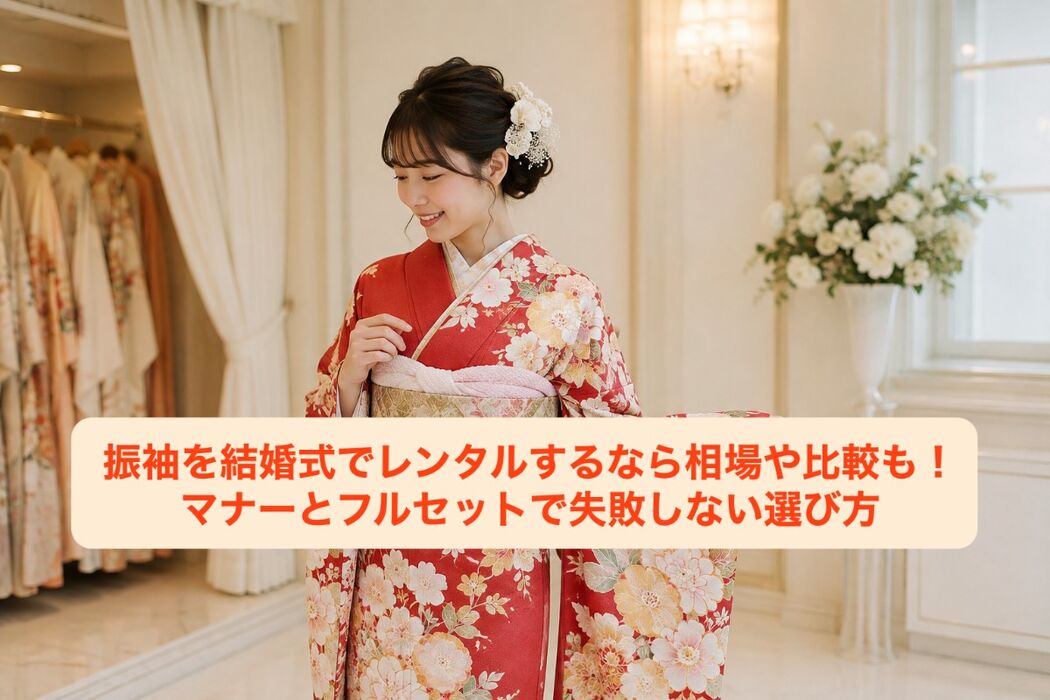
If you're renting a furisode (long-sleeved kimono) to wear to a wedding, here's what you need to know about wedding etiquette for different types of guests and the boundaries of what's acceptable and unacceptable.
The appropriate formality of the furisode or kimono worn at a wedding varies depending on your relationship to the guest. Generally, unmarried women should wear furisode, while married women should wear houmongi or irotomesode as formal attire. If you are invited as a friend, a vibrant chufurisode is recommended, but it's safer to avoid colors close to white, colors that clash with the bride's, or those with an excessive amount of gold or silver . For relatives, formality is even more important; unmarried sisters and close relatives typically wear furisode, while mothers and married relatives usually wear tomesode or irotomesode. When attending as a colleague, it's important to choose a color scheme that complements the main couple and a subdued pattern; classic patterns and understated designs are preferred. Choosing an outfit that suits the venue and time of day is also important. When renting a furisode, check the set contents and the level of formality (formal/semi-formal) , and understand the differences between furisode, houmongi, and tomesode to make it easier to choose an outfit that suits your position. It's also reassuring for overseas guests to be familiar with traditional Japanese manners.
- Friends/Guests : Medium-length furisode kimono is acceptable, but avoid white or overly revealing clothing.
- Relatives : Unmarried sisters typically wear furisode (long-sleeved kimono), while mothers and married women generally wear tomesode or irotomesode (formal kimono).
- For business-related occasions : Choose a furisode or houmongi in understated colors and patterns for an elegant look.
Accessories also directly impact the formality of your outfit. Choose formal sandals and bags, and opt for understated combinations of collar and obi sash.
How to understand the average cost and total expense when renting a furisode (long-sleeved kimono) to wear at a wedding.
The cost of renting a furisode (long-sleeved kimono) differs between online delivery services and brick-and-mortar stores . Online services often include round-trip shipping and offer full sets, while brick-and-mortar stores offer the advantages of trying on kimonos, getting styling advice from staff, and on-the-day support . The key is to compare the "total cost." Compare the basic fee plus round-trip shipping, insurance, late fees, stain handling, dressing and hair styling (external costs) , and also consider transportation and storage on the day of the event. In urban areas, there are many store options and the convenience of plans that include dressing . On the other hand, for busy people or those attending from far away, a full set delivered by mail is more efficient. In addition to price, prioritizing whether all necessary accessories are included, whether returns are easy, and whether late return conditions are clear will increase satisfaction. Visitors from overseas should also check the convenience of delivery rentals, return methods, and support system to ensure peace of mind.
- Checkpoints : Price, set contents, rental period, round-trip shipping fee, return method
- Often overlooked costs : Dressing/hair styling/travel expenses, whether or not there are photography fees.
Follow these steps to determine the total cost and choose the perfect outfit for you.
- Check availability based on your desired date and size, and narrow down your choices to about three options.
- The total cost is determined by adding shipping fees, insurance, late fees, and other charges to the base fee.
- Check the availability of kimono dressing and hair styling appointments, and simulate the flow of the day.
- Finalize the color and pattern, and complete your reservation 2-3 weeks in advance.