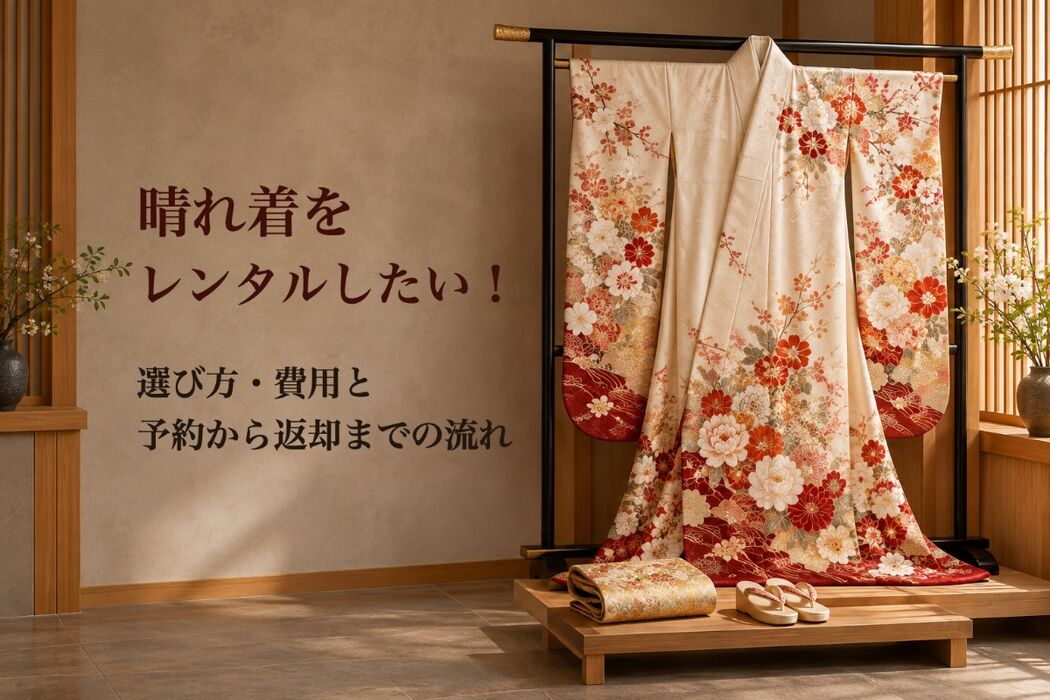
Want to rent formal wear? How to choose, costs, and the process from booking to return.

query_builder 2026/10/30
著者:浅草着物レンタル結衣
画像10646
画像10646

晴れ着をレンタルしたいと考える際、「総額はいくらかかるのか」「フルセットには何が含まれるのか」「いつ予約すればよいのか」と迷う方も多いでしょう。衣装の種類だけでなく、着付けや撮影、送料、小物の追加によって支払う金額は変わります。表示された料金だけで決めず、利用日に必要なものを含めた総額で比べることが大切です。

この記事では、国内で利用する方と訪日外国人の方の双方に向けて、用途に合う晴れ着、料金の見方、セット内容とサイズ選び、予約から返却までの手順を説明します。初めて和装に触れる方も、着る場面と移動の予定を思い浮かべながら確認してみてください。

式典用の振袖や留袖と、街歩き向けの着物では、求められる格式や必要な小物が異なります。「晴れ着レンタル」という言葉だけで探すと、用途に合わない衣装を選ぶおそれがあります。まず利用目的を決め、そのうえで費用、サイズ、受取・返却の条件をそろえて比較しましょう。

着物レンタルなら充実のプランと丁寧なおもてなしを提供 - 浅草着物レンタル結衣

浅草着物レンタル結衣は、和装をもっと身近に楽しんでいただけるよう、多彩な着物レンタルサービスをご提供しています。日本のお客様はもちろん、海外からお越しのお客様にも安心してご利用いただけるよう、豊富なサイズやデザインの着物・浴衣をご用意し、一人ひとりに合わせたコーディネートをご提案いたします。経験豊富なスタッフが着付けからヘアセットまで丁寧に対応し、初めて着物を着る方でも安心してご利用いただけます。浅草着物レンタル結衣は、心を込めたおもてなしときめ細やかなサポートを大切にし、一人ひとりに特別な和装体験をお届けいたします。

浅草着物レンタル結衣
浅草着物レンタル結衣
住所〒111-0032東京都台東区浅草1-16-2 キャトルシックビル2階
電話03-6802-7535

お問い合わせご予約

Compare the cost of renting formal wear based on the total price and the contents of the set.

Change your perspective on market prices depending on the intended use.

It's impossible to compare the prices of furisode, houmongi, tomesode, hakama, children's celebratory wear, and baby's kimono with a single price range, as the composition of the garments and the period of use differ. For coming-of-age ceremonies, there are many choices for obi and accessories for furisode, and the total cost increases when combined with dressing and pre-wedding photo shoots. For weddings, the formality of the houmongi and tomesode, as well as the combination of obi, zori, and bag, are important. For graduation ceremonies, the hakama are combined with the kimono, and for Shichi-Go-San (7-5-3) ceremonies, the conditions vary depending on the child's size and accessories.

Prices range from a few thousand yen for casual wear around town to tens of thousands of yen or more for formal occasions. However, you cannot use the price of a casual yukata or komon (casual kimono) as a benchmark for judging the price of a furisode or tomesode (formal kimono). Even for the same type of garment, there will be differences depending on the material, date of use, rental period, and whether or not dressing services are included. When researching prices, compare plans that are similar in purpose and included services.

If you want a photo shoot, make sure the price for the costume and the price for the photo shoot and hair styling are displayed together. If you don't need a photo shoot, you can compare prices without including those costs to make your choice easier. Don't just consider the price; also consider whether all the necessary obi and accessories are included and whether you can receive them by the day you want to wear the costume.

Estimate including additional costs

The basic fee may only include the kimono and obi, with items like the nagajuban (undergarment) and zori (sandals) being selected separately. On the other hand, even full sets may not include undergarments, tabi (socks), hair ornaments, or towels for padding. Even if it says "complete set," the contents vary depending on the plan, so check the list of included items rather than just the name.

Expense item Things I want to confirm
Costumes and accessories The range includes kimono, obi, nagajuban, obi accessories, zori sandals, and bags.
Kimono dressing and hair styling Whether a reservation is required, the location of use, and whether there are any additional charges.
Shipping and Returns Round-trip shipping costs, delivery method, and return shipping label.
compensation Covered stains and damage, and cases where they are not covered.
photograph Whether or not a photo shoot is included, how to receive the photos, and any additional costs.

When considering the total cost, add the actual services used, such as accessories, dressing, hair styling, photography, delivery, and insurance, to the costume fee. Also, confirm in advance whether cleaning is required and what happens if the return is delayed. If any additional charges are unclear, it's best to inquire with the store before making a reservation.

When comparing prices, it's important to distinguish between "kimono only" and "kimono dressing included," even for the same type of kimono. Also, check for transportation costs to the dressing location and whether there are any additional fees for getting ready early. If you're adding insurance, read how it covers normal wear and tear versus major damage or loss. Knowing what's not included in the price list will allow you to compare the actual costs even for plans that seem cheap.

Also, check the difference between purchasing and renting.

If you only plan to wear the outfit once, renting is a good option as it requires less storage and maintenance. If you plan to wear it repeatedly and share the same outfit with your family, you can consider purchasing. Children's clothes change sizes quickly as they grow, so you need to consider whether they will fit for future events. Compare not only the purchase price, but also the effort involved in alterations, storage, and maintenance.

Choose formal attire suitable for occasions such as coming-of-age ceremonies and weddings.

First, decide on the occasion and the role of the person wearing the outfit.

For coming-of-age ceremonies, furisode kimonos are commonly chosen, and for graduation ceremonies, hakama trousers are popular. For weddings, the appropriate attire varies depending on whether you are attending as a family member or as a invited guest. Choose from black tomesode, colored tomesode, visiting kimonos, or solid-colored kimonos, according to your role and the atmosphere of the venue. If you are unsure, check the ceremony invitation and the wishes of the organizers before consulting with the rental company.

For Shichi-Go-San (a traditional Japanese rite of passage for children), suitable options include a hifu (a type of vest), yotsumi (a type of kimono), or haori hakama (a type of formal jacket and trousers) that fits the child's age and build. For Omiyamairi (a traditional shrine visit for newborns), a ubugi (a type of kimono worn by newborns) is used. It's important to consider whether the outfit allows the child to move easily and whether it's easy to put on and take off. If you're renting outfits for the parents at the same time, be sure to check the dressing time and travel time for each person.

When foreign visitors to Japan want to take commemorative photos or try on traditional Japanese clothing, letting them know whether they are attending a ceremony or strolling around town will help narrow down the outfit choices. If they plan to visit temples, shrines, or wedding venues, be sure to check the dress code information for those locations. If there will be long periods of travel, discussing not only appearance but also comfort and the duration of wear will ensure a more pleasant experience.

Even for the same event, your priorities will differ depending on whether you'll be spending time indoors or walking outdoors. If you plan to walk outdoors, check during the fitting whether the hem and sleeves are easy to handle and whether you can move comfortably in sandals. If there will be a meal, ask about a way to wear the kimono that will allow you to sit for a long time without discomfort. If it's your first time wearing a kimono, it's a good idea to ask who to contact if your kimono becomes disheveled so you can act calmly.

Match the colors, patterns, and accessories to the occasion.

The impression of formal wear changes not only with its color and pattern, but also with the combination of the obi (sash), sandals, and bag. If you want to look glamorous, make the most of the kimono's pattern and coordinate the colors of the obi and layered collar for a cohesive look. If you want a more subdued impression, limit the number of colors and check how brightly the outfit looks around your face when you try it on. It's important not to decide which colors suit you based solely on your age, but to choose based on how they look on your face, your personal preferences, and how well they suit the occasion.

For formal occasions such as weddings, make sure that the formality of your outfit, obi (sash), and accessories matches. When taking photos, you can also be mindful of how you stand to show the patterns on your sleeves and obi, and how the colors of the outfit contrast with the background. However, choosing based solely on photos may result in the actual color and texture being different from what you imagined. If you're buying from a store, try it on in both natural and indoor light. If you're ordering by mail, be aware that the colors may differ from those in the photos.

If you are using the service while visiting Japan, it will be easier to communicate your wishes if you specify the purpose of use in addition to the name of the kimono. Please describe the occasion specifically, such as "attending a wedding," "taking photos at a family event," or "walking around town." If you are unsure about the language, please check the dressing, return, and contact procedures in case of stains while looking at photos of the costume and the size chart. Even if you are applying from within Japan, if you are renting costumes for family members or companions together, it will be helpful to decide who will be in charge of picking up and returning the costumes to avoid confusion.

Check the set contents, size, and what to bring.

I'll find out what's likely to be missing even in a full set.

Ceremonial sets may include a kimono, obi (sash), nagajuban (undergarment), obi-jime (sash cord), obi-age (sash scarf), kasane-eri (layered collar), koshihimo (waist cord), date-jime (waist sash), obi-ita (sash board), obi-makura (sash pillow), zori (sandals), and a bag. However, the contents may vary depending on the type of kimono and the plan. Checking the number of koshihimo and whether or not hair ornaments are included in the list will help prevent any shortages on the day.

In some cases, you will need to provide your own underwear, tabi socks, and towels for padding. When choosing tabi socks, check not only the length of your feet but also the height of your instep, and choose underwear that is not easily visible from the neckline. If you are concerned about underwear that constricts your body, consult with the person dressing you about suitable styles. When dressing children and babies, pay attention to the parts that come into contact with their skin and to temperature regulation.

  • View the list of costumes, obi sashes, and accessories to confirm what you will receive.
  • Assign someone to prepare tabi socks, underwear, towels for padding, and hair accessories.
  • Consider whether you need rain gear, warm clothing, and footwear for walking.
  • Keep the return shipping label, storage bag, and other items you will need for the return.

On days when rain is expected, it's a good idea to bring a rain coat to protect your trousers from mud splashes, sandal covers, and a folding umbrella. You can adjust to colder weather with a shawl or similar item. Avoid bringing too many accessories, as this can make carrying them difficult; choose items that suit the location of the event and your mode of transportation.

When checking the set, compare each item, even those with similar names like obi-jime (kimono sash cord) and obi-age (kimono sash scarf). Try on any items you've prepared yourself as soon as possible to check that the tabi socks aren't too tight and that walking in the zori sandals doesn't cause any pain. Choose undergarments that won't be easily visible from the collar or sleeves of the kimono. Keep the packing list handy so you know how to contact them if you notice anything missing after the outfit arrives.

Measure your height, sleeve length, and hips.

When choosing formal wear via delivery, measure your height, sleeve length, and hips, and compare them to the corresponding sizes for each product. Sleeve length is the length from the center of the back of the neck, across the shoulder, to the wrist. Hips are measured horizontally at the widest point. For hakama, also check the hakama length and how it will fit with footwear. If your measurements are close to the upper limit of the stated size range or fall between multiple sizes, it's best to consult with the rental company rather than making a decision on your own.

Children's costumes can change in size between the time of booking and when they are worn. As the date of use approaches, double-check the size and ask if exchanges or adjustments are possible. For foreign visitors to Japan, instead of directly applying overseas clothing sizes, providing measurements in centimeters will help reduce misunderstandings. If possible, try on the costume and check how easily your child can move when raising their arms or sitting down.

Check the process from reservation to pickup and return.

Choose your pickup method: home delivery or in-store pickup.

Home delivery is a convenient way to receive your order and compare multiple outfits and prices. However, there may be differences between the photos and the actual colors, and trying them on can be difficult. At a physical store, you can see and try on the actual items, and you can also get advice on obi sashes, accessories, and dressing techniques at the same time. Since this requires a visit to the store and travel on the day, please check if it fits into your schedule.

When making a reservation, please provide the date of use, type of costume, size, fitting location, and pick-up/return method. Popular patterns and sizes may be booked in advance, so please check availability once your plans are finalized. If you wish to have a pre-wedding photoshoot or hair styling, please check if a separate reservation slot is required in addition to the costume reservation. Change and cancellation policies vary by store, so please read the deadlines and fee policies before applying and keep a record of them.

Foreign visitors to Japan should confirm the languages in which instructions are provided, contact methods, pick-up locations, and the return deadline before their departure. If you plan to pick up the equipment at your accommodation, check with both the rental company and your accommodation to see if pick-up is possible. If your itinerary may change, be sure to find out the contact information and conditions for changes in advance.

When reviewing your application details, check not only the date you will be wearing the costume, but also the pick-up and return times. If your schedule is tight, allow ample time for dressing and travel. If the event date is likely to change due to weather, check how much can be changed. Checking whether the customer service center's operating hours match your usage time will also help you prepare for any problems.

Check the condition and included accessories upon arrival.

Once you receive your costume, compare the included items list with the actual items to check for size, stains, and tears. If there are any missing items or defects, contact the rental company before wearing it. If it's delivered by courier, check the delivery status and contact them if a delay is expected so they can easily arrange an alternative delivery method. Even if you pick it up at a store, be sure to check what you need to bring for dressing and the meeting time on the day of the rental.

On the day of rental, be sure to walk carefully to avoid dragging the sleeves or hem, and take care to protect the hem on rainy days. If stains or damage occur, do not try to scrub or wash them yourself; instead, record the condition and contact the rental company. Coverage and maintenance methods vary depending on the contract. It is important to receive instructions before attempting to remove stains or iron the garment yourself.

If you remove any accessories while wearing the outfit, decide on a storage place for them to avoid losing them and ensure a smooth return. If you change hair accessories or bags during the photoshoot, please make sure to return all borrowed items. If you find any stains, record the location and circumstances, and follow the instructions given when returning the items. Return procedures differ between home delivery and in-store returns, so prioritize the procedure indicated at the time of application.

Pack according to the return conditions.

Before returning the rental items, double-check the number of items, including the obi, nagajuban, zori, bag, and accessories, and make sure no personal belongings are mixed in. If any of the garments are wet, check with the rental company about how to handle them. Whether or not cleaning is required will also depend on the contract. For return by courier, use the specified packing method and shipping label, and keep a copy of the shipping receipt for easier verification. If returning to a store, check the business hours and return location.

By noting the pick-up date, wearing date, and return date on your schedule, it becomes easier to coordinate with events and travel plans. When renting formal wear, checking not only the appearance of the outfit but also the total cost, included items, size, contact information, and return conditions will help you approach the big day with peace of mind.

For kimono rentals, we offer comprehensive plans and attentive service - Asakusa Kimono Rental Yui

Asakusa Kimono Rental Yui offers a variety of kimono rental services to make traditional Japanese clothing more accessible and enjoyable. We have a wide selection of kimonos and yukatas in various sizes and designs, ensuring a comfortable experience for both Japanese and international customers. We offer personalized coordination suggestions. Our experienced staff provides attentive service from dressing to hair styling, making it easy even for first-time kimono wearers. Asakusa Kimono Rental Yui values heartfelt hospitality and meticulous support, delivering a special traditional Japanese clothing experience to each and every customer.

Asakusa Kimono Rental Yui
address 2nd Floor, Quatre Chic Building, 1-16-2 Asakusa, Taito-ku, Tokyo 111-0032
phone 03-6802-7535

Inquiries and Reservations

access

Store name: Asakusa Kimono Rental Yui
Address: 2nd Floor, Quatre Chic Building, 1-16-2 Asakusa, Taito-ku, Tokyo 111-0032, Japan
Phone number: 03-6802-7535