Let's learn the basics of kimono rental.
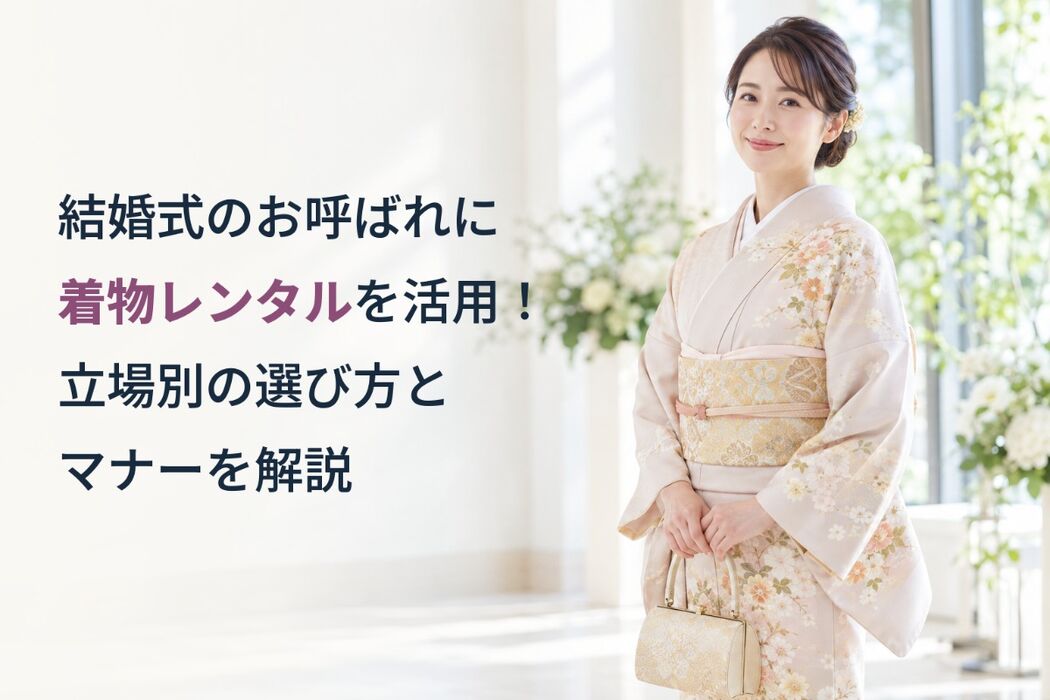
When choosing a kimono for a wedding invitation, it's important to select formal attire that suits your position and the appropriate etiquette. There are four main types of kimonos: houmongi, irotomesode, kurotomesode, and furisode. Kurotomesode is the most formal attire for married relatives , irotomesode is suitable for relatives and high-class venues , houmongi is versatile for a wide range of guests including friends and colleagues , and furisode is a gorgeous formal attire for unmarried women . There are two rental methods: in-store rental and delivery rental . In-store rental has the advantage of allowing you to try on kimonos, get dressed, and have your hair styled on the same day, and there are many stores in major cities. Delivery rental delivers a full set to your home, and is usually received the day before and returned the next day, making it convenient for busy people. Check the shipping costs, insurance, and the clarity of the size chart. If price is your priority, delivery is better, but if you want to leave everything, including preparation for the day, to the staff, in-store rental is more suitable.
Learn about the appropriate level of formal attire, which varies depending on your position and the occasion.
Choosing attire appropriate to your position is key to looking elegant at a wedding. For relatives and mothers, a black formal kimono (kurotomesode) is the first choice , and formal attire with a family crest is a safe bet. For younger married women and sisters, a colored formal kimono (irotomesode) is also an option. For guests such as friends, colleagues, or superiors , a visiting kimono (houmongi) is the most recommended , and choosing a color and pattern that matches the venue's atmosphere and the season will also make you look good in photos. Unmarried women can dress up in a furisode (chufurisode) for a glamorous look, but avoid white or bridal-style hair accessories to maintain overall harmony. Also, consider the formality and atmosphere of the venue. For formal venues and solemn ceremonies, a colored formal kimono (irotomesode) or visiting kimono is appropriate, while a visiting kimono in a brighter color is suitable for more casual venues. Thinking along the lines of "relatives should wear more formal attire, and general guests should mainly wear visiting kimonos" will make it easier to decide.
Tips for choosing the right rental method
The rental method you choose depends on how much of the preparation on the day you want to leave to the rental company. Store rentals often allow you to book dressing and hair styling at the same time , reducing worries about travel and luggage. Stores in major cities make morning preparations smooth. Home delivery rentals are mainly for receiving the full set the day before , making them ideal for those who don't have a store nearby or who want direct delivery to a distant venue. Key points to consider when choosing are the pick-up and return procedures, insurance and cancellation policies, the completeness of the accessories, the clarity of the size indications, and whether dressing is required. Choosing based on criteria such as "prioritizing trying on and preparation on the day → store" or "prioritizing price and ease of travel → home delivery" will reduce the chances of making a mistake.
- Suitable for customers who want to try on clothes to see how they look, and who want to have their dressing and hair styling done in one place.
- Suitable for home delivery : For those who prioritize price and schedule, or who want direct delivery to a wedding venue far away.
- Commonly important : Coverage, return deadline, and size confirmation.
Perfect for beginners! Criteria to avoid mistakes.
To avoid mistakes when renting a kimono for a wedding, keep these four points in mind: venue formality, season, photogenic qualities, and etiquette. First, it's best to avoid white , and opt for light or neutral colors that won't clash with the bride's attire. For patterns , avoid overly large all-over patterns or strong gold accents . For formal venues, choose classic patterns, and for more casual venues, softer colors will create a sense of unity. For the season, choose patterns that reflect the time of year, such as cherry blossoms, autumn grasses, or snowflakes, to highlight the beauty of Japanese culture. For photogenic qualities, the brightness of the obi, the formality of the obi, and the use of accent colors in the obi- jime and obi-age will make your face appear more vibrant. Practicality is also important; check the height of the sandals (no heels required) , comfort for long periods of wear, and the distance to the venue. Choose a size based on your height and hip measurements, and plan for 30-45 minutes for dressing. If using a delivery service, check the pick-up and return methods in advance and simulate the process to ensure a smooth experience.
| Judgment axis |
Store rental |
Home delivery rental |
| Preparation |
Easy to book both kimono dressing and hair styling at the same time. |
Arrange it yourself, or request a business trip. |
| Price |
Peace of mind with a set, but tends to be a bit pricey. |
A full set is a relatively good deal. |
| Try on |
Check how it suits you on the spot |
Please check the pre-view images and size chart. |
| Receipt/Return |
Completed in-store |
The standard practice is to receive items the day before and return them the next day. |
| Service Area |
Many stores are located in urban areas. |
Nationwide delivery, convenient even for wedding venues far away. |
Even with delivery, you can reduce the burden on the day by arranging separate services for dressing and hair styling. By taking advantage of the benefits of each method, you can enjoy the day even more.