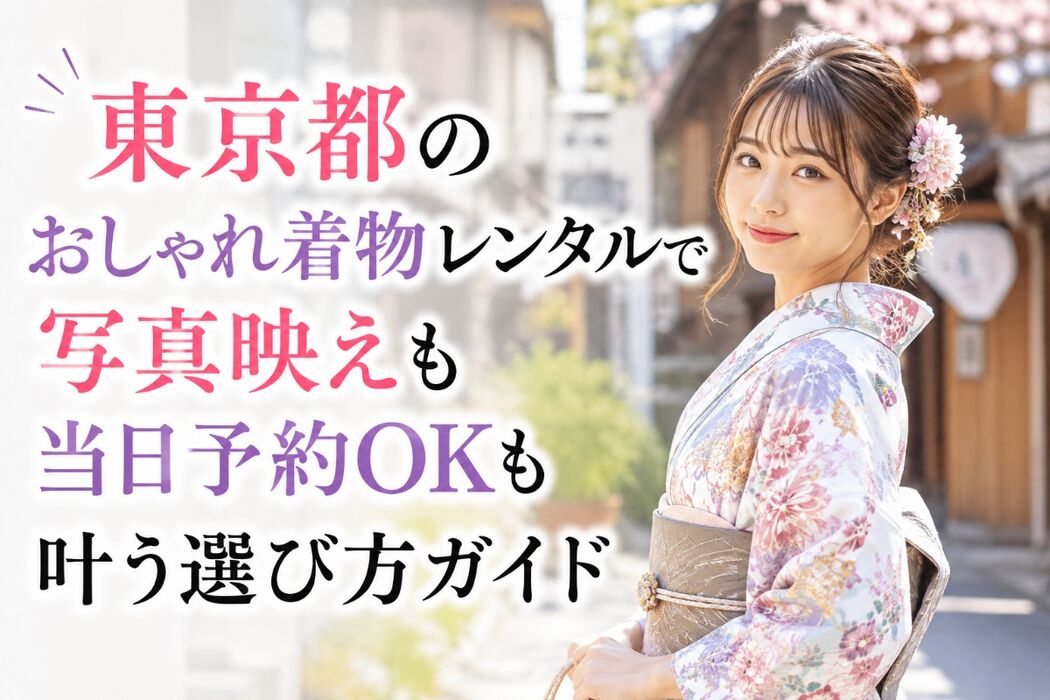
A guide to choosing the perfect kimono rental in Tokyo, where you can find photogenic options and same-day reservations are available.

query_builder 2026/09/24
著者:浅草着物レンタル結衣
画像9886
画像9886

「東京都でおしゃれな着物レンタルを探しているけれど、写真映えの基準やプランの違い、当日の所要時間がわからない」——そんな不安を感じていませんか。浅草・銀座・東京駅周辺といった人気エリアは、背景の色彩や雰囲気が豊かで、着物の色柄や帯・小物・ヘアスタイルのバランス次第で印象が大きく変わります。観光や記念撮影を計画する際は、予約から返却までの流れと時間配分の把握がとても重要です。

本記事では、色の明度・彩度・トーンの使い分けや言語化、顔タイプや身長別の柄選び、雷門や並木道などロケーションごとの色合わせ、半幅帯・名古屋帯と髪飾りの組み合わせ方までを、実践的な視点で整理しています。

着物レンタルなら充実のプランと丁寧なおもてなしを提供 - 浅草着物レンタル結衣

浅草着物レンタル結衣は、和装をもっと身近に楽しんでいただけるよう、多彩な着物レンタルサービスをご提供しています。日本のお客様はもちろん、海外からお越しのお客様にも安心してご利用いただけるよう、豊富なサイズやデザインの着物・浴衣をご用意し、一人ひとりに合わせたコーディネートをご提案いたします。経験豊富なスタッフが着付けからヘアセットまで丁寧に対応し、初めて着物を着る方でも安心してご利用いただけます。浅草着物レンタル結衣は、心を込めたおもてなしときめ細やかなサポートを大切にし、一人ひとりに特別な和装体験をお届けいたします。

浅草着物レンタル結衣
浅草着物レンタル結衣
住所〒111-0032東京都台東区浅草1-16-2 キャトルシックビル2階
電話03-6802-7535

お問い合わせご予約

Choosing a stylish kimono rental in Tokyo: Criteria and tips for achieving great photos.

Showcase your style with photos! How to choose colors, patterns, and outfits.

The shortcut to looking stylish in photos is to be mindful of the balance of brightness, saturation, and tone . For example, soft tones with medium to high brightness are a good match for dark alleys or cobblestone streets. In places with a prominent background, such as the vibrant vermilion of Kaminarimon Gate or the red of lanterns, choosing nuanced colors with medium to low saturation will prevent the kimono from overpowering the background and create a balanced look. In popular tourist spots like Asakusa, if the pattern is too intricate, the photo will be cluttered with too much information, so it's better to choose a pattern that is visible in a broader area and add a single accent accessory for a more photogenic shot. Adjusting the skin tone with lace innerwear or a half-collar, and using similar colors with varying brightness for the obiage and obijime will create a sense of depth, further enhancing the compatibility of kimono rentals with photos. Because Tokyo's cityscape has a lot of reflections from glass and metal, incorporating accessories with a matte texture will reduce glare and give tourist snapshots a more refined look. By being mindful of these coordination points, foreign visitors to Japan can also capture wonderful photos that blend traditional Japanese beauty with modern cityscapes.

  • point
  • Brightness differences sharpen outlines, and saturation differences make the main subject stand out.
  • Brighten up the area around your face with lace or a half-collar.
  • The obi accessories are elegantly styled using similar colors but with contrasting textures.

Tips for choosing patterns that suit your face type and height

Choosing a pattern that suits your body type and facial features will further enhance your stylish kimono rental experience in Tokyo. For shorter individuals, thin stripes, vertical motifs, or small, evenly spaced patterns that draw the eye vertically will create a balanced look. For taller individuals, large patterns or high-contrast patterns will prevent the face from appearing stretched out, creating a striking presence in photographs. Curvilinear patterns such as flowers and dots harmonize well with rounder facial features, while linear patterns such as arrow feathers and checkerboards will look sharp on those with more defined features . When choosing a obi (sash), adjust the length to suit your height; shorter individuals should choose a knot that makes the obi appear lighter , while taller individuals should choose a knot that makes full use of the surface area for a more three -dimensional look. For hairstyles, creating some negative space around the face will create a reflector effect, and placing hair ornaments on the upper side where the eye is drawn will make you look better in photos. If you're using the kimono for extended periods while sightseeing, choosing lightweight accessories will reduce fatigue and make it easier to capture natural smiles in photographs. International travelers will also enjoy choosing patterns and accessories that suit their body type and facial features.

Body type/Facial features Guidelines for patterns and color schemes Tips for styling your obi/hair.
Short stature Small pattern, thin stripes, medium brightness A slender obi sash is used to emphasize vertical lines, and the hair ornament is placed high.
Tall Large, high-contrast pattern The three-dimensional knot prevents the hair from looking too long, and the hair ornament helps to keep it from spreading out horizontally.
Curvy facial features Floral, circular patterns, soft color scheme Curvilinear motif hair ornament
Straight facial features Arrow feather, checkerboard, and a striking color scheme A hairstyle with straight lines in mind.

How to choose colors that look great in outdoor photos, such as those taken in Asakusa or near Kaminarimon.

Popular locations like Asakusa, Kaminarimon Gate, tree-lined streets, and cobblestone streets offer varying background color temperatures and textures, so adjusting the contrast for each scene will make your photos more sophisticated. In front of Kaminarimon Gate, red is the dominant color, so using contrasting colors with medium saturation, such as muted blue or greige, will create a good balance. On tree-lined streets, light-colored or ivory kimonos create a light feel against the green of the leaves, while on cobblestone streets and alleys, medium-brightness deep colors (ink, indigo, grape) will stand up to the texture and create a sharp impression. When taking tourist snapshots in the evening, the light has an orange tint, so intermediate colors with yellow undertones are ideal for flattering skin tones. With yukata, the matte texture of cotton reduces reflections outdoors, so it's a good idea to choose a glossy material for the obi to add rhythm. When using this service with a couple or friends, combining different colors with the same tone will create a sense of unity and individuality in group photos. Knowing these color coordination tips will make your photos from your trip to Japan even more memorable.

  1. Observe the main color of the background.
  2. Use contrasting colors or differences in brightness to make the main subject stand out.
  3. Enhance the three-dimensional effect with texture (matte/glossy).
  4. Brighten your face with bright accessories.

A stylish combination of obi and hair ornaments.

The obi (sash) and hair ornaments are major factors in determining the overall impression. A half-width obi is light and allows for easy movement, making it perfect for taking photos while walking around sightseeing. A Nagoya obi can be shown as a whole surface, making it recommended for areas like Ginza or when you want to create a calm atmosphere. When choosing the obi-jime (sash cord), consider the triangular color scheme (kimono, obi, and accessories) to create a sense of lightness in photos. Use the contrast in brightness of the obi-age (sash scarf) to create volume . For hair ornaments, choosing one that is about 1/5 the width of your face will prevent the overall balance from being disrupted, and placing it as a single accent on the upper side will draw attention. If you add a lace inner or embroidered han-eri (collar), choose a obi with a glossy texture to create a matte x gloss texture contrast for a sophisticated urban look. Using a kimono rental plan that includes dressing and hair styling has the significant advantage of ensuring consistent time and results on the day, making it easier to look good in photos . Even international travelers can enjoy wearing traditional Japanese clothing more by keeping these points in mind.
A thorough check of popular kimono rental plans and price sets in Tokyo.

A guide to choosing a simple plan for enjoying sightseeing and photography.

If you want to enjoy wearing traditional Japanese clothing in style in Tokyo, start by comparing simple plans that suit your sightseeing and photography style. Shops located near tourist spots such as Asakusa and Ginza often offer plans that are short and easy to navigate . As a guideline, the process from check-in to departure takes about 60-90 minutes, and returns are generally made on the same day . Some shops may offer extensions or next-day returns. Yukata are perfect for summer sightseeing in Tokyo and couples' photo shoots, and their lightness and ease of movement are their main attractions. For those who prioritize photos, we recommend the option of combining kimono rental and photography. When choosing, key points to consider are not only the price, but also what is included in the set , the walking time from the station, and whether same-day reservations are possible. If you want to enjoy sightseeing in Tokyo while wearing a kimono, be sure to check if hair styling is included or if it's possible to use the service empty-handed . These points of consideration when choosing a plan are also useful for foreign visitors to Japan.

  • Convenient for sightseeing and photography : Getting around the Asakusa Kaminarimon area and the area around Tokyo Station is smooth.
  • Popular with couples : Yukata and accessory sets that are easy to coordinate in color.
  • Same-day service : Many stores offer same-day appointments if there is availability.

What's included in the set and can I come empty-handed? Checklist of things to bring.

Many stylish kimono rental shops in Tokyo offer set plans that include everything you need. The key to determining whether you can rent a kimono without bringing anything is whether items like undergarments and tabi socks are included. Below is a summary of common rental options, organized for easy comparison of what you need to bring . Even for simple plans for sightseeing, photography, or yukata rentals, checking the contents beforehand will prevent confusion on the day. Returns are typically by closing time; it's best to confirm in advance if you wish to extend the time. Choose according to the season: yukata in summer, and komon or hakama in autumn and winter. Allowing 30-45 minutes for dressing will ensure a smooth experience. Higher-end rentals often include high-quality hair ornaments and obi sashes, contributing to better photos. If you want to rent a kimono without bringing anything, choose a plan that includes tabi socks and undergarments ; if hygiene is a concern, check the option to purchase new items. Checking these set contents is also important for international visitors, ensuring a worry-free experience.

item Handling guidelines Guidelines for whether you can come empty-handed
Kimono, obi, and accessories Many plans include it as standard Possible
Sandals and bags For tourists, it's common to include these items in the package. Possible
Underwear and tabi socks Some plans include this feature, while others require separate purchase. It depends on the plan
Hair styling Advance reservations are the norm. Options available
Cold weather gear and rain gear Additional measures may be taken depending on the season and weather. Consultation available

For formal occasions! Tips for choosing elegant kimono, formal wear, or furisode (long-sleeved kimono) rentals.

When renting a kimono for a wedding or formal ceremony in Tokyo, it's important to choose attire that matches the level of formality, etiquette, and atmosphere of the venue . Relatives should wear visiting kimonos or formal kimonos, while friends should wear visiting kimonos or plain-colored kimonos, and keeping accessories understated will create an elegant impression. A furisode is the most formal attire for coming of age and is appropriate for a formal occasion. Allow ample time for dressing and hair styling appointments , and ensure you have 30-60 minutes for travel and getting ready between the completion of the rental and the start of the ceremony. The area around Tokyo Station is easily accessible, making it a convenient option. At ceremonies with many photographs, the height of the obi and the cleanliness of the collar greatly affect the impression. Depending on the season and time of day, it's also important to have a haori or shawl ready, and to take precautions against soiling the hem in case of rain. Kimonos made of high-quality fabric will have beautiful colors even under lighting, making them look great in photographs. Sharing these manners and dressing points with overseas guests will enrich their experience of wearing traditional Japanese clothing at the ceremony.

  • Matching formality : Relatives should generally wear more formal attire, while friends should wear semi-formal attire.
  • Hair styling tip : Updos tend to stay in place when wearing a furisode kimono.
  • Estimated time required : Dressing takes 45-60 minutes, and hair styling takes 30-45 minutes.

A roundup of great spots to enjoy wearing traditional Japanese clothing around Asakusa, Ginza, and Tokyo Station, along with photography tips.

Recommended ways to take photos around Kaminarimon Gate and Senso-ji Temple

To make your kimono photos look their best in Asakusa, the key is choosing the right background and time of day. Instead of heading straight from Kaminarimon Gate to Nakamise Street, take a side street and use the alleys lined with lanterns and lattices as your backdrop to avoid crowds and enjoy a retro atmosphere. Along the river at Azumabashi Bridge and Sumida Park, the bridge's framework and the reflection on the water enhance the colors of your kimono , making it a great spot for couples and friends to take photos. The area in front of Senso-ji Temple's main hall tends to be crowded, so aim for the soft light between 8 and 10 AM, when your skin will look beautiful and the sky will be clearer . In the afternoon, try to capture elegant shots with angled light that takes advantage of the shadows cast by the five-story pagoda. Asakusa's tourist routes are easy to understand, and it's appealing that you can visit multiple backgrounds in a short time after getting dressed . If you want to take photos in kimono in Tokyo, planning your tour of the Asakusa area, which is well-suited to kimono rentals and photography, will increase your satisfaction. Asakusa's diverse backgrounds are a particularly popular experience spot for foreign visitors to Japan.

  • Utilizing side streets : The alleys beside Nakamise shopping street offer both pedestrian-friendly options and a retro feel.
  • Bridges and riverside areas : Take in a wide view of the water surface and sky at Azumabashi Bridge and Sumida Park.
  • Early morning is best : 8-10 am is ideal for skincare as the soft, direct light makes your skin look beautiful.
  • Differentiate yourself with accessories : Add a touch of three-dimensionality with a Japanese umbrella or lace obi sash.

How to take elegant and simple kimono photos in the city center

Ginza and the area around Tokyo Station are home to many modern buildings, cobblestone streets, and tree-lined avenues, making them ideal locations for elegantly showcasing plain or muted-colored kimonos . The contrast between the brick-colored Tokyo Station Marunouchi building and the obi (sash) is pleasing, and blurring the background and placing the subject in the center highlights the linear beauty of the Japanese attire . The area around the Ginza intersection has many highly reflective glass surfaces, so during the day, choose a shaded side and utilize the "reflector effect" of the building walls to create smooth skin tones. The evenly spaced trees along the avenues help to reduce background noise, making simple outfits appear more sophisticated . When shooting, ensure safety by standing at the edge of the sidewalk, and try incorporating shots that show the obi from the half-body or back view to broaden the variety of your photos. When considering kimono rental in Tokyo, choosing a location in the city center that is easy to get around to allows you to efficiently capture a variety of shots even with a short stay.

Location Optimal time slot Target
Tokyo Station Marunouchi Building Morning to late morning The contrast between the brick and the band color, and the central placement create a sense of linear beauty.
Ginza skyline Shady side during the day Avoid reflections from glass surfaces and use the soft light reflected from walls to even out skin tone.
Tree-lined streets and cobblestone paths Afternoon to evening The repeating background makes the band and outline stand out clearly.
  • Eye-tracking technique : Stand at the vanishing point of the path to enhance your style through perspective.
  • Hand styling : Add small accessories to the cuffs to elegantly fill in any empty space.
  • Pay attention to your footing : When walking on cobblestones, stand with your toes slightly inward to ensure your sandals are properly visible.

The process of renting a stylish kimono in Tokyo, from booking to return, and tips for managing your time.

Summary of steps and estimated time from booking to completion of dressing

To smoothly enjoy renting a stylish kimono in Tokyo, it's essential to work backward from your planned schedule and understand the total time required. If you're planning sightseeing or a photoshoot, allow approximately 90-120 minutes , and be sure to allow extra time during peak hours. Asakusa and Ginza, in particular, tend to be very popular, so checking availability and return times is crucial if you're making a same-day reservation . The following order is generally recommended for efficient and smooth operation.

  1. Check-in (5-10 minutes): Confirmation of reservation details, identification, and final confirmation of rental plan.
  2. Kimono selection and fitting (20-30 minutes): Checking size and deciding on coordination.
  3. Kimono dressing (15-25 minutes): Adjustments made to fit your body shape and prevent the kimono from coming undone.
  4. Hair styling (15-25 minutes): Choose from styles such as updos or wavy hair.
  5. Final check of small items and payment (5-10 minutes): Explanation of payment and return methods.
  6. Preparation for departure (5 minutes): Check in luggage and check everything.

Rain or shine, no worries! Kimono rental solutions tailored to the weather.

By referring to the table below and preparing accordingly for each weather condition, both domestic and international tourists can enjoy comfortable travel and photography.

weather Tips for getting ready Strategies for filming and travel
rain Bring a water-repellent jacket, raincoat , and folding umbrella. Short photo shoots at torii gates, under arcades, and at temples and shrines with roofs.
Strong winds Hairpins and U-pins that stay securely in place , and tight updos I focused on taking photos in alleys and near buildings where I could easily avoid the wind.
Under the scorching sun Parasol, fan, ice packs , keep your neck cool. We traveled while taking breaks in parks with shade or along the river.
cold day Layering undershirts, a shawl , and thermal tape around the neck. Use indoor facilities and covered walkways to move around.
  • In Asakusa, if you use the covered side of Nakamise Street, you can take photos with an Edo-period atmosphere as a backdrop, even in the rain.
  • If you're going out in the scorching sun, shifting your departure time to the morning or evening will allow for softer light, resulting in more beautiful photos .

About renting stylish kimonos in Tokyo

Stylish kimono rentals are particularly popular in Tokyo, with many shops operating mainly in tourist areas such as Asakusa, Ginza, and Harajuku. Their appeal lies not only in their high-quality designs, but also in the fact that customers can enjoy a total coordination experience including dressing, hair styling, and accessories. There's a growing trend of people prioritizing photogenic opportunities, as well as couples and groups. Choosing based on the following points will further enhance your satisfaction.

Reasons why stylish kimono rentals are chosen (or sought after) in Tokyo

There are many reasons why Tokyo is chosen as a place to rent kimonos. First, it has plenty of tourist attractions and cityscapes that are perfect for taking photos. Second, there are many shops, making it easy to compare and choose from. The availability of a variety of plans tailored to the user's needs and the ability to receive optimal coordination suggestions for each occasion are also major attractions.

About Tokyo

Tokyo , as Japan's central city, is an international area where tourism, commerce, and culture converge. It is known as a city where diverse people come and go, and where trends and traditions blend. Each area has its own unique character, from the old-town atmosphere of Asakusa to the upscale feel of Ginza and the youth culture of Harajuku and Shibuya. Therefore, kimono rentals can be chosen to match the characteristics of each area.

For kimono rentals, we offer comprehensive plans and attentive service - Asakusa Kimono Rental Yui

Asakusa Kimono Rental Yui offers a variety of kimono rental services to make traditional Japanese clothing more accessible and enjoyable. We have a wide selection of kimonos and yukatas in various sizes and designs, ensuring a comfortable experience for both Japanese and international customers. We offer personalized coordination suggestions. Our experienced staff provides attentive service from dressing to hair styling, making it easy even for first-time kimono wearers. Asakusa Kimono Rental Yui values heartfelt hospitality and meticulous support, delivering a special traditional Japanese clothing experience to each and every customer.

Asakusa Kimono Rental Yui
address 2nd Floor, Quatre Chic Building, 1-16-2 Asakusa, Taito-ku, Tokyo 111-0032
phone 03-6802-7535

Inquiries and Reservations

access

Store name: Asakusa Kimono Rental Yui
Address: 2nd Floor, Quatre Chic Building, 1-16-2 Asakusa, Taito-ku, Tokyo 111-0032, Japan
Phone number: 03-6802-7535